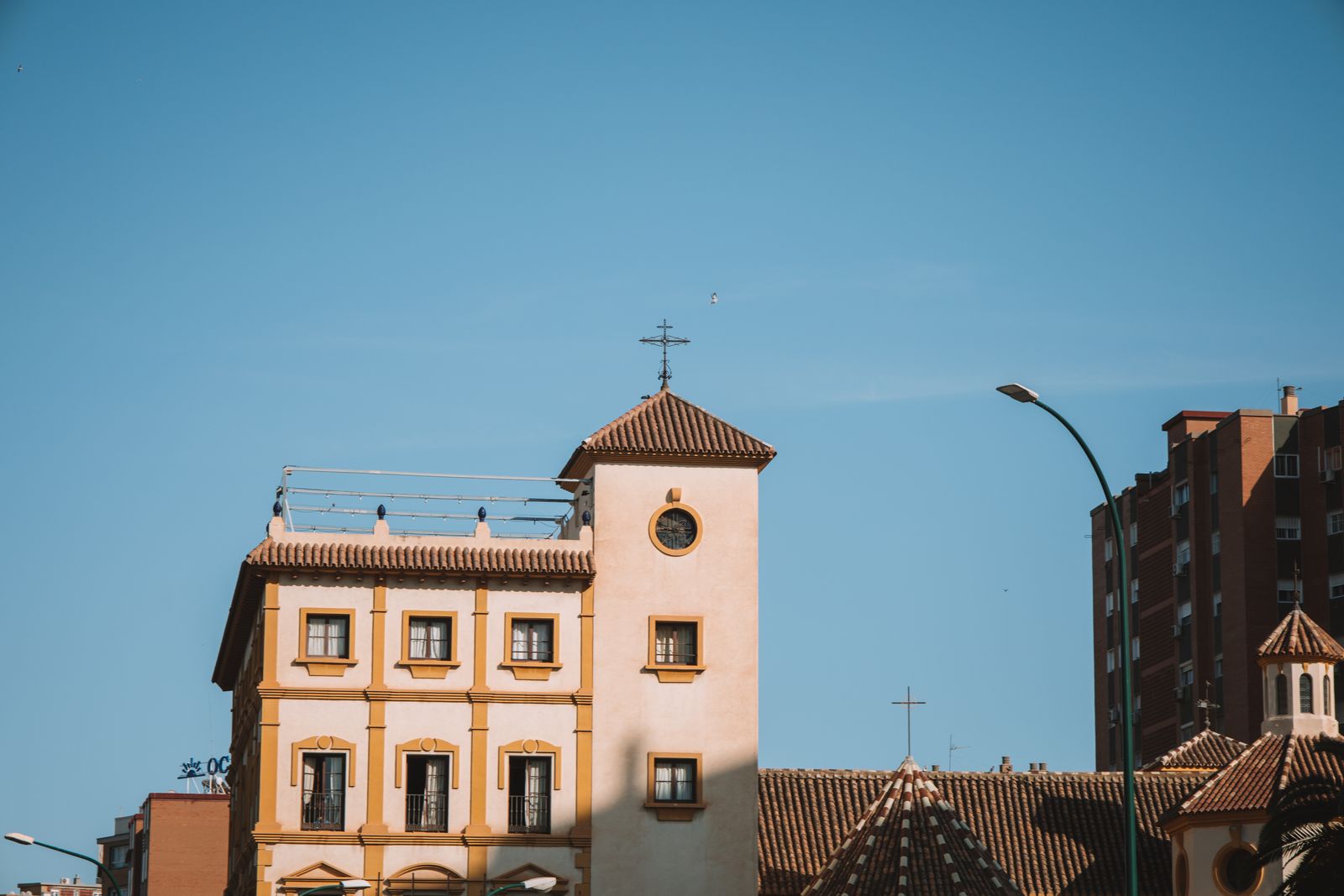



Between 2015 and 2025, housing in Spain became 24.5% more expensive relative to household incomes, according to Eurostat: the fifth-largest rise in the European Union, behind Portugal, the Netherlands, Hungary and Czechia. Even so, the price-to-income ratio remains far from the 2007 bubble.
The European statistics office published its annual comparison of house prices and disposable income per person in November 2026. For anyone thinking of buying on the Costa del Sol, the figures help answer a specific question: whether the Spanish market is expensive compared with its own history and with the buyer's home country.
What does the house price-to-income ratio measure?
The indicator divides the house price index by disposable income per person. If it rises, homes are getting more expensive faster than incomes; if it falls, incomes are catching up. Eurostat uses it as a warning signal in the EU's macroeconomic imbalance procedure.
There is an important caveat: it measures change over time, not the level. Portugal rising more than Germany does not mean buying in Lisbon is dearer than in Munich; it means affordability has worsened more there since 2015.
In which European countries are house prices outpacing incomes the most?
The ratio rose in 17 of the 27 member states and fell in 10. The table shows the EU countries that send the most buyers to our area, together with each country's position against its own long-term average.
| Country | Change 2015-2025 (%) | 2025 level vs its long-term average (%) |
|---|---|---|
| Portugal | +60.8 | +37.0 |
| Netherlands | +34.3 | +12.0 |
| Czechia | +25.8 | +18.1 |
| Spain | +24.5 | +7.5 |
| Ireland | +14.4 | -1.7 |
| Denmark | +9.1 | +5.8 |
| EU average | +6.8 | 0.0 |
| Germany | +1.6 | -4.6 |
| Belgium | -2.7 | +2.8 |
| Poland | -3.7 | -13.8 |
| France | -5.6 | -4.2 |
| Sweden | -6.5 | +6.2 |
| Italy | -11.9 | -13.1 |
| Finland | -25.2 | -23.3 |
Source: Eurostat, house price-to-income ratio indicator (tipsho60), annual data published in November 2026. The biggest falls in the whole EU were in Romania (-42.8%), Finland (-25.2%) and Bulgaria (-16.2%).
Is Spanish housing overvalued?
Eurostat's second series compares each year with the average since 2000. In Spain, the 2025 price-to-income ratio is 7.5% above that average. In 2007, at the height of the bubble, it was 31.9% above, and in 2013 and 2014 it fell to 13% below.
In other words, affordability has clearly worsened since 2015, especially over the last year, but the market is not in 2007 territory. For the EU as a whole, the indicator peaked in 2007 (+7.9%) and 2022 (+7.4%), bottomed out in 2014 (-6.4%) and in 2025 was almost exactly at its average.
The causes in Spain are well known: far fewer new homes are being built than households are formed, foreign demand is strong on the coast and wages have grown more slowly than prices. None of this changes from one year to the next, which is why valuers do not expect widespread price falls in the short term.
How much does it cost to buy on the Costa del Sol today?
The national index does not break down by area, and on the coast the pressure is higher than the Spanish average. These are the medians of the homes for sale in our catalogue in November 2026, asking prices, with long-term rent per square metre and the estimated gross yield.
| Town | Median sale price (€/m²) | Median price (€) | Rent (€/m² per month) | Gross yield (%) |
|---|---|---|---|---|
| Marbella | 6,053 | 950,000 | 25.85 | 5.1 |
| Benahavís | 5,635 | 995,000 | 23.10 | 4.9 |
| Fuengirola | 5,314 | 549,000 | 23.28 | 5.3 |
| Malaga | 4,977 | 625,800 | 29.60 | 7.1 |
| Estepona | 4,825 | 625,900 | 23.33 | 5.8 |
| Benalmádena | 4,569 | 630,000 | 21.39 | 5.6 |
| Torremolinos | 4,468 | 500,000 | 18.99 | 5.1 |
| Mijas | 4,317 | 549,000 | 19.74 | 5.5 |
| Casares | 3,591 | 465,000 | 19.49 | 6.5 |
| Manilva | 3,398 | 359,000 | 17.86 | 6.3 |
| Costa del Sol total | 4,744 | 649,000 | 23.70 | 6.0 |
The gap within the coast is large: the median price per square metre in Marbella is almost double that of Manilva, and the western area of Casares and Manilva offers the highest gross yields along with the capital. The figures are updated every month in our Costa del Sol market report.
What does it mean for a foreign buyer?
For someone buying with income earned outside Spain, the Spanish indicator matters less than the trend in their own country. A Dutch buyer comes from a market where housing has outpaced salaries even more (+34.3%); a German, Belgian or French buyer, from markets where the ratio has barely moved or has fallen.
- Always compare price per square metre, not just the total price: neighbouring towns can differ by more than 30%.
- Work out the yield with long-term rent, not holiday rent, which depends on licences and rules that are changing.
- Add the purchase costs: taxes, notary and land registry add around 8-10% to the price of a resale home in Andalusia.
- Do not expect a correction like 2008: the indicator is above its average but far from that level, and new supply remains scarce.
Conclusion: dearer than in 2015, but no bubble
Eurostat's data confirm what buyers are noticing: in Spain, housing has outrun incomes for a decade. But the market is 7.5% above its historical average, not 32% as in 2007. On the Costa del Sol, the key is still choosing the right area and price per square metre. If you want to compare options with real data for each town, the EVS Property team will help you find the home that fits your budget.
FAQ
How much have house prices risen relative to incomes in Spain?
According to Eurostat, the ratio of house prices to income per person rose 24.5% between 2015 and 2025, the fifth-largest increase in the EU.
In which European country have house prices risen most relative to salaries?
Portugal, with a 60.8% increase between 2015 and 2025. It is followed by the Netherlands (+34.3%), Hungary (+26.5%), Czechia (+25.8%) and Spain (+24.5%).
Is there a housing bubble in Spain in 2026?
The data do not suggest so: in 2025 the price-to-income ratio was 7.5% above its average since 2000, compared with 31.9% in 2007.
What is the average price per square metre on the Costa del Sol?
The median for homes for sale is 4,744 euros per square metre in November 2026, from around 3,400 in Manilva to over 6,000 in Marbella.
What next? The most useful thing after reading is to look at the real market: browse properties by city or tell us on WhatsApp what you are looking for — area, budget, timing — and we will prepare a tailored selection, with no obligation.
You may also find useful: sell your property invest on the Costa del Sol free valuation monthly price report