

The European Commission lists the housing shortage in Spain among the main risks to its growth in its autumn economic forecast, published on 17 November 2026. Brussels expects the Spanish economy to grow by 2.6% this year, but warns that the lack of supply keeps pressure on prices and makes it harder for workers to move to where the jobs are.
For anyone thinking of buying on the Costa del Sol, the message is clear: the problem will not be solved soon, because years pass between the building permit and the handover of keys. We explain what the report says, why housing has become a macroeconomic issue and what our own market data show.
What does Brussels forecast for the Spanish economy?
Spain remains among the most dynamic economies in the Union: the growth expected for 2026 is almost double the EU average of 1.4% and comfortably above the euro area's 1.2%. The engine is employment, supported by immigration, which according to the Commission will keep expanding the labour force, helped by the recent extraordinary regularisation of migrants.
| Forecast for Spain | 2026 | 2027 | 2028 |
|---|---|---|---|
| GDP growth | 2.6% | 2.1% | 1.9% |
| Job creation | 2.3% | 1.8% | 1.6% |
| Unemployment rate | 9.9% | 9.6% | 9.4% |
The less welcome part is inflation: the Commission raises it to 3.9% for 2026, nine tenths of a point more than in spring. And unemployment, although falling every year, will remain well above the European average of around 6%.
Why does the housing shortage hold back growth?
The reasoning in Brussels is simple. Jobs are concentrated in the large urban areas, but if finding a flat, especially to rent, is very expensive, many workers cannot move there. Those hit hardest are young people, lower-income families and vulnerable groups.
- Labour mobility: without affordable homes, talent does not reach the cities that create jobs.
- Prices: with supply stuck, a rise in demand turns into higher prices sooner than into more homes on the market.
- Building costs: more expensive materials and energy squeeze developers' margins and may discourage new projects.
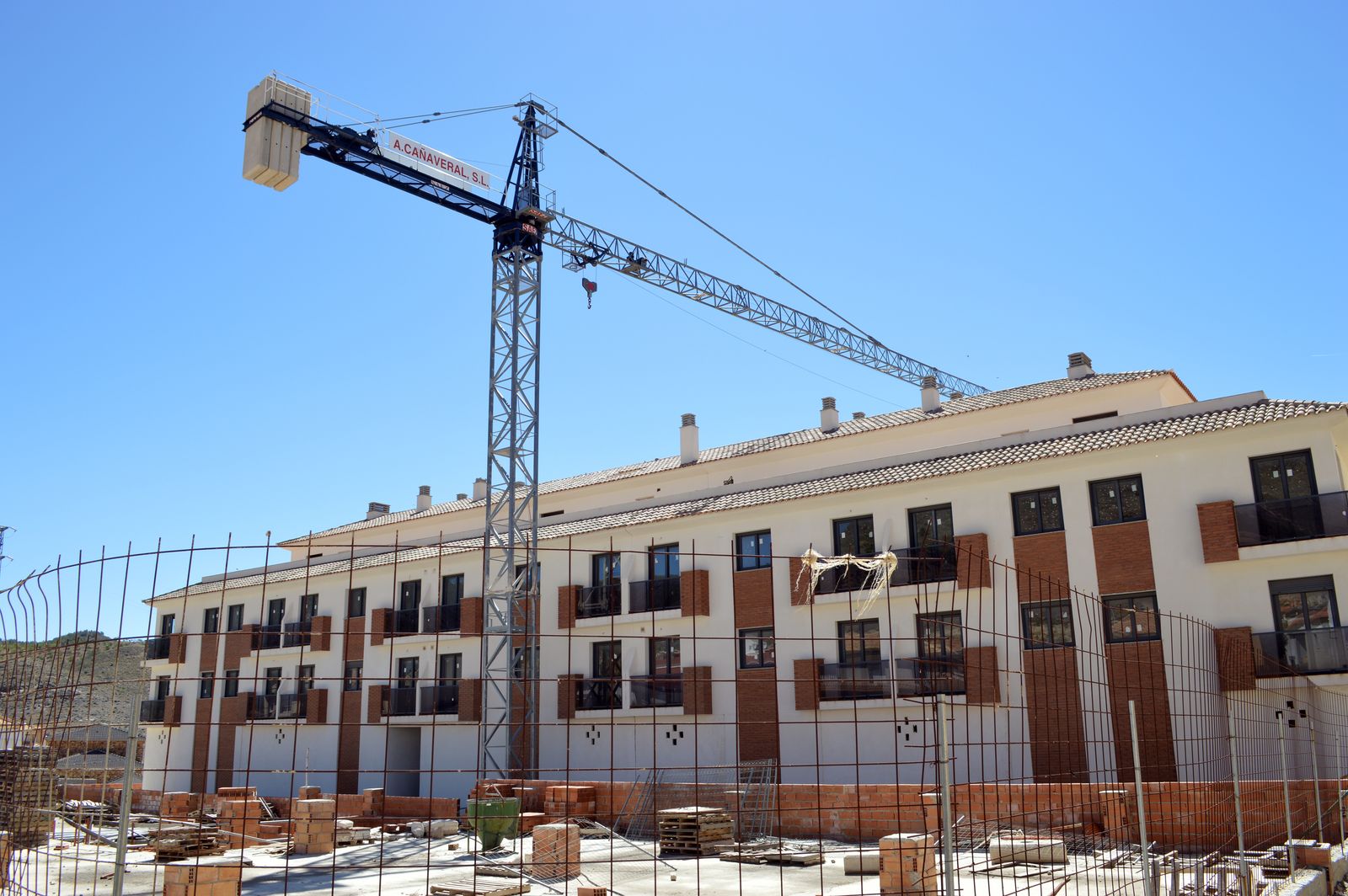
- Timing: although building permits are recovering, three to four years can pass between the permit and completion.
The Commission points out that the problem is European. Residential construction in the EU will remain practically stagnant in 2026 because of high interest rates, a shortage of construction workers and tighter financing, and will recover only moderately over the following two years.
What is happening to prices on the Costa del Sol?
Our market report, which recalculates the asking prices in our portfolio every month, shows an expensive market that still leaves room to negotiate. These are the figures updated on 19 November 2026 for the towns with the most homes for sale:
| Municipality | Median price | Median €/m² | Listings with a price cut |
|---|---|---|---|
| Marbella | €950,000 | 6,009 | 13.6% |
| Estepona | €630,000 | 4,782 | 13.9% |
| Mijas | €547,000 | 4,329 | 16.4% |
| Fuengirola | €549,000 | 5,299 | 19.0% |
| Benahavís | €990,000 | 5,599 | 12.7% |
| Malaga | €612,000 | 5,000 | 13.8% |
| Benalmádena | €620,000 | 4,620 | 14.0% |
| Manilva | €360,000 | 3,418 | 13.7% |
| Whole coast | €649,000 | 4,736 | 14.1% |
One in seven homes for sale in our portfolio already shows a recorded price cut, with more room in Fuengirola and Mijas. This is not a collapse: the median for the whole coast has barely moved since October, when it stood at €4,738/m². It fits what Brussels describes: high and steady prices, because new supply arrives in a trickle.
Construction in the province of Málaga shows the gap. According to the Ministry of Housing, around 10,000 private homes were started in 2025 and just over 6,200 were completed, compared with more than 83,000 started in 2003. Activity has grown tenfold since the low point of 2013, but it is still far from keeping up with the arrival of new residents and international buyers.
What does it mean for people who want to buy?
If the Commission's diagnosis is right, a general fall in prices on the coast is not to be expected in the short term: demand remains strong and new supply will take years to arrive. That does not mean buying at any price.
- Negotiate with data: compare the asking price with the local median and check whether the property has already been reduced.
- Check the timeline of new builds: a development that gets its permit today may not be handed over until 2029 or 2030.
- Factor in inflation: with consumer prices forecast to rise by 3.9% in 2026, the cost of financing weighs more heavily on the decision.
- Think about renting out: the shortage Brussels describes keeps long-term rental demand strong, with an average gross yield of close to 6% in our portfolio.
Housing is no longer just a property-market issue: Brussels now treats it as a brake on the whole economy. For buyers, the practical conclusion is to decide with reliable local information. If you want to know what a home in the area you like is really worth, our team can help you compare prices, reductions and timelines before you take the step.
Frequently asked questions
Why does Brussels say housing is holding back the Spanish economy?
Because the shortage of homes, especially rentals, prevents many workers from moving to the cities where jobs are created and keeps prices high. The European Commission says so in its autumn 2026 forecast.
How much will the Spanish economy grow in 2026 according to the European Commission?
By 2.6%, almost twice the EU average. For 2027 and 2028 the Commission expects growth to ease to 2.1% and 1.9%.
Will the lack of supply bring prices down on the Costa del Sol?
It is unlikely in the short term. With few new homes, the Commission believes a rise in demand would push up prices before it increases the number of homes available, although one in seven homes in our portfolio already has some kind of reduction.
How long does it take to build a new home in Spain?
Three to four years usually pass between the granting of the permit and the handover of keys, according to the EU sources quoted in the report. That is why the recovery in building permits is not immediately visible in supply.
What next? The most useful thing after reading is to look at the real market: browse properties by city or tell us on WhatsApp what you are looking for — area, budget, timing — and we will prepare a tailored selection, with no obligation.
You may also find useful: sell your property invest on the Costa del Sol free valuation monthly price report