

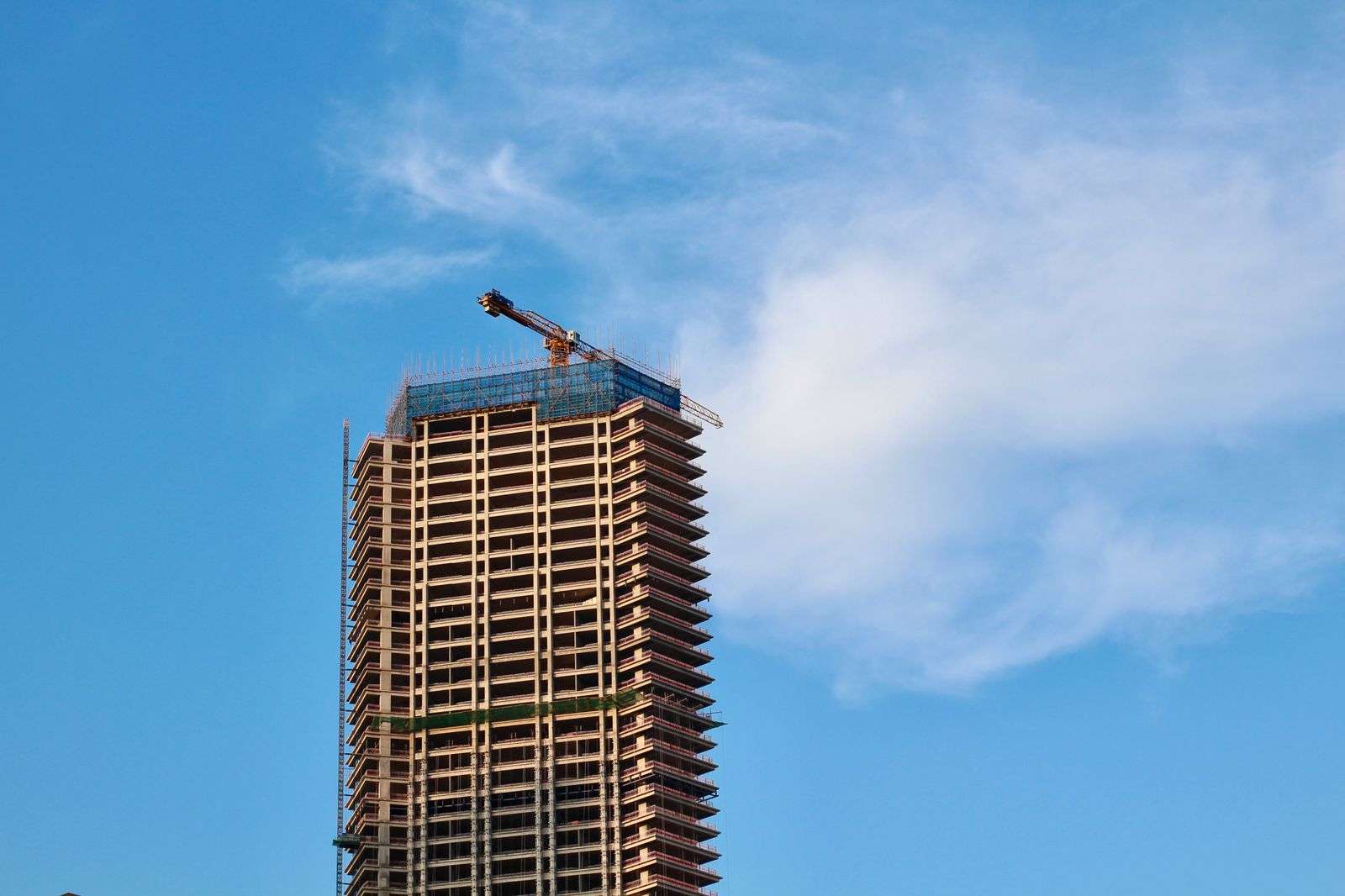
Home building in Spain keeps losing steam in 2026: the construction output index published by the national statistics office (INE) fell 9.8% year on year in July and has now dropped for seven consecutive months. The hardest-hit segment is building work itself, down 35.2% on a year earlier. For the Costa del Sol the reading is straightforward: when less gets built while demand keeps growing, the housing shortage deepens and prices have little room to fall.
What exactly does the INE July figure say?
The indicator is called IPCO (Construction Output Index) and since January 2026 it replaces the old Ministry of Transport survey. It measures how much value added the sector generates each month, stripping out price effects, and it is harmonised with the rest of the European Union. July's fall is slightly smaller than June's, when output dropped 12.3%, but the underlying picture is unchanged: the sector has produced less than a year earlier in every month of 2026.
| Segment | Year-on-year change, July 2026 | Monthly change |
|---|---|---|
| Building construction | −35.2% | −1.4% |
| Civil engineering | −4.6% | Positive |
| Specialised construction | −0.8% | +2.0% |
| Whole sector | −9.8% | Three months in a row in the red |
On the seasonally and calendar-adjusted series, July's year-on-year decline widens to 13%, compared with 14.7% in June. In other words, the pace of decline is easing slightly, but we are still talking about a sector producing considerably less than in 2025.
Why is building work falling when there is housing demand?
The paradox is obvious: Spain needs more homes, yet only around 100,000 units are completed each year, a figure nobody expects to exceed in the short term. Several causes are piling up behind it.
- Shortage of ready-to-build land: municipalities such as Marbella or Estepona have scarce and expensive licensed developable land, and permits take years.
- Labour shortage: the sector cannot find enough crews and every new development takes longer to deliver.
- High construction costs: materials and wages have risen, and many developments only pencil out in the mid-to-upper segment.
- Dearer financing: with the Euribor above 3%, developers are more selective and delay projects.
This figure should not be confused with GDP data: second-quarter national accounts showed construction growing, but public works and renovation weigh heavily there. What the IPCO shows clearly is that new building, the part that creates housing supply, is the segment contracting the most.
What does it mean for Costa del Sol prices?
Less building means less new-build stock reaching the market in 2027 and 2028, precisely when demand from Spanish and international buyers remains at record levels. In our September 2026 market report, compiled from 8,810 active listings, the median price on the Costa del Sol stands at €650,000 and €4,657/m². These are the figures for the municipalities where the shortage of new land is most visible.
| Municipality | Active listings | Median price | Price per m² |
|---|---|---|---|
| Marbella | 2,197 | €955,000 | €5,972 |
| Estepona | 1,435 | €649,000 | €4,689 |
| Mijas | 1,247 | €549,000 | €4,213 |
| Fuengirola | 698 | €575,000 | €5,387 |
| Benalmádena | 412 | €595,000 | €4,428 |
| Malaga | 394 | €625,348 | €4,684 |
| Costa del Sol (overall) | 8,810 | €650,000 | €4,657 |
These are asking prices and medians, not closing prices, but the trend matches what we see day to day: when a development launches in Estepona or Mijas, the best-positioned units are reserved within weeks, and well-located resale homes absorb the buyers who cannot find new builds.
What should each type of buyer do about it?
If you are buying a home to live in
Waiting for a wave of new builds to bring prices down does not look like a realistic strategy: that wave is not under way. It makes more sense to fix a budget, compare renovation-ready resale homes with off-plan new builds, and negotiate armed with data. At the off-plan stage the developer usually offers the best prices and staged payment plans.
If you are an investor
The structural shortage of supply is the strongest medium-term argument for investors on the Costa del Sol. Areas with the least available land, such as Marbella and Benahavís, hold their value best, while Mijas, Manilva or Casares offer lower entry tickets and higher rental yields. Long-term rentals, with growing international demand, also benefit from the lack of new homes reaching the market.
If you are selling
Sellers have the wind at their back, but it is not a blank cheque: the 2026 buyer compares a lot and is sensitive to rising mortgage costs. A realistic price backed by a professional valuation and good presentation remain the difference between selling in a month or in six.
Conclusion
Seven months of falling construction output and a 35% slump in building work confirm what many suspected: Spain, and the Costa del Sol in particular, will not solve its housing deficit in the short term. For buyers it means acting with judgement rather than waiting for discounts that are not coming; for investors, a market with limited supply and firm demand. At EVS PROPERTY GROUP we track the market every month with our own data and can help you find the right deal in Málaga, Marbella, Estepona or any municipality along the coast.
Frequently asked questions
What is the construction output index (IPCO)?
It is the INE's monthly indicator measuring the real activity of construction companies in Spain, excluding price effects. Since 2026 it replaces the old Ministry of Transport survey and is comparable with other EU countries.
Will house prices on the Costa del Sol fall in 2026?
Nothing points to a broad decline: new supply is shrinking, international demand keeps growing and median prices hold at €650,000 across the coast. A slower pace of increases is the likely scenario, not a drop.
How many homes are built in Spain each year?
Around 100,000 homes a year, well below household formation. Experts agree that figure is unlikely to be exceeded in the short term due to shortages of land, labour and financing.
Is it worth buying off-plan in Marbella or Estepona?
It is usually the route with the best price and staged payments, in exchange for waiting 18 to 30 months. The key is to check the developer's solvency, the bank guarantee on deposits and the building licence before signing.
What next? The most useful thing after reading is to look at the real market: browse properties by city or tell us on WhatsApp what you are looking for — area, budget, timing — and we will prepare a tailored selection, with no obligation.
You may also find useful: sell your property invest on the Costa del Sol free valuation monthly price report